Tom Barten's Profile
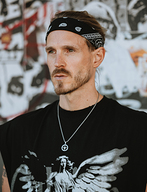
Tom Barten
Recent Messages
#personal-wellness - November 05, 2025 at 09:24 PM
@Brian Von Ancken <@U09EMS1CD8T>
That sounds awesome!
We’re thinking about the July/August/September period.
Let me know as soon as there’s more clarity.
#personal-wellness - November 03, 2025 at 10:08 PM
@Brian Von Ancken
Is there already an event calendar for 2026 by any chance? I’d love to come to the U.S. next summer with my family to meet WGM members in real life, so I can start planning ahead.
#intros - September 18, 2025 at 05:55 AM
Welcome <@U09FFELPE05>,
Great brand name and cool what you're doing. In the past (2013/14), I also started and ran a meal delivery service (vertically integrated — from kitchen with chefs to delivery).
Eventually, it became too capital-intensive, so I decided to stop after five years. If you’d ever like to exchange ideas or have a sparring session, I’m always open to it.
#intros - September 18, 2025 at 05:53 AM
Welcome Chris,
Great brand name and cool what you're doing. In the past, I also started and ran a meal delivery service (vertically integrated — from kitchen with chefs to delivery).
Eventually, it became too capital-intensive, so I decided to stop after five years. If you’d ever like to exchange ideas or have a sparring session, I’m always open to it.
#wgm-parents - September 09, 2025 at 09:04 AM
@Brian Von Ancken Really happy you created this channel. Hopefully, everything is going well with Luca!
We’re currently in Bali for 7.5 weeks with Daxx (3.5 months old). The 16-hour flight from the Netherlands to Indonesia went surprisingly well (just a little crying during landing).
My girlfriend Denise and I love traveling, making memories, and discovering new cultures (and we’re not big fans of rain and winter weather).
People here are incredibly kind to Daxx (in restaurants they often want to hold him). Of course, there are some adjustments to make, but we were prepared for that.
We brought a baby carrier, which we use a lot (our daily steps are through the roof haha), and we also brought the stroller. This Friday, a nanny will come by our accommodation for the first time. A little quality time for Denise and me.
So far, I can definitely recommend it. Before we had Daxx, many people told us: “Enjoy traveling while you still can.” To be honest, I find traveling even more fun now. We’ll see how it goes in the future, but for now, we’re enjoying it to the fullest.
If anyone would like tips or has questions, feel free to ask.
PS. The fitness, health, and wellness space is huge here in Bali. If anyone wants to know more about it, let me know.
#linkedin-love - August 29, 2025 at 08:56 PM
\
#wgm-parents - August 29, 2025 at 07:43 PM
@Tom Barten has joined the channel
#asks-offers-advice - August 04, 2025 at 07:26 AM
Hi <@U08HAF9SHRP>
Sorry, I don't know a specific PR agency in Germany. But I do know .
Maybe that could be helpful?
#asks-offers-advice - July 25, 2025 at 05:59 PM
<@U08P44C7AKX>
Before I provide detailed feedback on the page, I have a question: why is this a separate offer and not integrated into your core offering?
If I understand correctly, you conduct research and test the effectiveness of products, so that wellness brands have clinical study results to support their product claims?
With these study results, they also have a marketing asset in hand, but the marketing teams at these wellness brands don’t always know how to use that effectively?
Hence this new offer from your side, to help marketing teams communicate the study results in a compelling way that builds trust and ultimately drives sales?
#asks-offers-advice - July 24, 2025 at 08:06 AM
<@U08RB4E2PDG>
Do you have a link to the specific quiz?
It really depends on where you collect the information, how the content is structured, etc.
From my experience at my previous company, I know that a quiz converted better than sending people directly to the payment page.
At the start of the quiz, we also let people choose between a short or an extended version to gauge how "motivated" they were — this led to higher conversions.
Before showing the quiz results, we gave people the option to enter their name and email address and receive a lead magnet. That’s how we built our email list to 150,000 subscribers.
Long story short: conversion depends on the context. So if you can share more details, I’d be happy to take a closer look.
#asks-offers-advice - April 17, 2025 at 08:30 AM
<@U08HAF9SHRP>
Before diving into specific tactics like athlete endorsements or targeting medical teams, I think it’s worth taking a step back.
Building a strong brand—whether in performance, recovery, or any other market—depends on two key ingredients:
• Mental availability: are you top of mind when someone’s ready to buy?
• Physical/purchase availability: can people easily access and buy your product?
The key challenge for challenger brands is that they’re always competing with incumbents who already have the upper hand on both fronts.
Bigger brands are often the “default” choice—not necessarily because they’re better, but because they’re more familiar, more trusted, and more visible.
In B2B, buyers avoid blame and choose the safe option.
In B2C, buyers avoid regret and choose what feels familiar.
Now here’s the hard truth: if larger brands spend 10% of their revenue on marketing, they’ll almost always outspend smaller brands in absolute terms—even if smaller brands match that 10% ratio.
(1) Resources
Large brands have vast financial resources for marketing, R&D etc.
(2) Market Position
Large brands enjoy pre-existing mental availability
(3) Strategic Advantage
Large brands have a proven right to win and mass penetration potential
(4) Scale
Large brands benefit from economies of scale reducing per-unit costs
So if you're a smaller player with a fraction of the budget, there's only one winning play: Focus all your resources on a tightly defined niche.
Instead of spreading your limited budget thin across the entire market, concentrate it on a small segment of your ideal customer profile (ICP), so you can punch above your weight within that space.
That’s how you generate excess share of voice (ESOV), which has been proven to drive disproportionate growth. If you can’t have a bigger megaphone (=more resources), you need a smaller market.
(1) Focus your resources on a smaller subsegment of the market and get excess share of voice
(2) Build a strong relative position within that segment
(3) Adopt to segment needs and develop a high right to win
(4) Reduce risk and inefficiencies
So the real question becomes:
Within the niche you choose, how can you generate the highest possible ESOV with the least possible resources?
That might be:
• Partnering with high-trust micro-influencers or coaches in that niche
• Tapping into physio/rehab networks or specialist clinics
• Creating authority via niche content: newsletters, podcasts, video explainers
• Owning the conversation in one specific sport or recovery use-case
The answer really depends on:
• Who the buyer is (athlete, coach, medical team, general public?)
• Your current market share and positioning
• What kind of product you’re selling (price point, complexity, differentiation)
• And which sports or communities naturally align with your product values
Top athletes can certainly create mass awareness—but they can also drain your budget fast. They’re not always the best path to trust or conversion, especially early on.
Targeting niche communities with deep credibility can often create stronger, longer-lasting impact. Sometimes the most effective move is to own a small, underserved community with laser focus, then expand outward from there.
- Segment your market
- Focus high value + high right to win segments
- Tailor your 4Ps accordingly
- Develop a right to win
Hope this is helpful. Feel free to reach out if you’d like to dive deeper or need any further input.
#asks-offers-advice - April 16, 2025 at 02:51 PM
<@U08HAF9SHRP> Is it a B2C brand or a B2B2C brand? In other words: who is the buyer? That way, I can tailor my advice more specifically.
#asks-offers-advice - April 16, 2025 at 02:38 PM
<@U08LLL40UUS>
I agree founder-led growth can be an incredibly powerful driver in the first years of a startup’s life.
But eventually, every founder hits a wall—whether it’s running out of fresh audiences, new things to say, time and attention to keep saying it... or just sheer exhaustion.
That’s why I always advise founders to lean hard into founder-led growth initially, but with the clear understanding that it’s a temporary accelerant—a bridge to help you buy 18–24 months while you build proper internal marketing and sales functions.
At the end of the day, founder-led growth is like technical debt in product development: a fast way to get to market, but eventually, it becomes your biggest liability.
A strong founder brand can be a growth accelerant—but over-relying on it is a risk most companies don’t see coming.
Because when a business is built entirely around one person’s voice, credibility, and audience... that works—until it doesn’t.
What happens when:
• The founder steps back?
• They burn out on content?
• The market shifts, and the founder’s personal brand no longer aligns?
Sustainable brands are built to stand on their own—where trust, awareness, and demand aren’t dependent on a single person’s LinkedIn posts.
Founder-led brands can be powerful. But if that’s your only strategy, it’s a hidden liability.
To me, it absolutely makes sense to build multiple thought-leader brands within a company to reduce that risk.
That said, founders are often a) the most committed people in the company and b) the least likely to leave.
The key is to create good systems to capture their insights—through interviews, for example—and turn those into content, with minimal effort required on their part.
A founder’s brand should be a spotlight—not a crutch. If the company never develops its own voice, it’s not building a brand. It’s just borrowing one.
Strong examples of modern founder-led marketing across different industries:
• Emma Chamberlain with Chamberlain Coffee – turning a deeply personal content style into a distinctive, lifestyle-driven brand.
• Daniel Dalen with Lense – using high-quality, short and long-form video and personal presence to build credibility and audience early.
• Ross MacKay with Cadence – leveraging transparency and personal mission to build trust in a highly competitive wellness space.
• George Heaton with Represent – showcasing how a founder's aesthetic vision and cultural voice can scale a fashion brand globally.
• Nick Bare with Bare Performance Nutrition (BPN) – building a loyal customer base by documenting the journey and values behind the business via YouTube and podcasting.
• Grace Beverley with TALA and Shreddy – combining influencer-driven reach with a sharp focus on community, and transparent brand storytelling.
These founders all use their voice and visibility as an engine for early growth—but importantly, they also build systems, teams, and brand equity that don’t depend solely on them.
#asks-offers-advice - April 10, 2025 at 02:03 PM
@Brian Von Ancken
Thanks for sharing the essay — I’ve read it as well. While I agree with some of the frustrations, I believe it reflects a tactical, channel-first mindset that overlooks the deeper strategic and scientific foundation of marketing.
Most of the channels discussed — SEO, paid social, email, referral, and so on — are not strategies. They’re tactical tools. You wouldn’t ask a carpenter which tool is “working” this year — it depends entirely on what they’re trying to build. Marketing works the same way.
A real strategy starts with understanding actual customer needs through research, building a product that better meets those needs than alternatives, positioning it effectively, and only then activating through the appropriate mix of channels.
Yes, many of today’s marketing channels are saturated or over-optimized. But that’s not a reason to abandon them — it’s a reason to use them more intelligently. The Law of Shitty Clickthroughs is real, but the problem is not the channel itself, it’s how the channel is used.
The same "laws" apply to all brands
Large and small brands grow according to the same fundamental principles — including the Double Jeopardy Law, the Duplication of Purchase Law, and the Natural Monopoly Law. What differs is not what works, but how it’s applied.
Established brands operate with scale, consistency, and established memory structures. Smaller brands don’t have those assets — yet. But they are playing the same game. The challenge is that small brands must approach these principles in a way that reflects their more limited resources and unique context.
To grow effectively, all brands must build both mental availability and physical availability. Mental availability means being easily thought of in buying situations. Physical availability means being easy to access and purchase. These two factors are equally important, and the difference between a start-up and an established business is most visible in these areas.
Big brands already have both forms of availability and continue to invest in them to maintain growth. Start-ups, by contrast, start from zero. One of the main reasons early-stage companies fail is because they run out of resources before reaching the minimum viable level of mental and physical availability needed to sustain their business.
Small doesn’t mean small thinking
All big brands started small. There are advantages to being a small brand — including agility, speed, and proximity to real consumer needs. Big organizations often move slower and play it safe, which creates openings for smaller players to act faster and take creative risks.
But the fundamentals still apply. Small brands must still aim to reach everyone in their chosen audience — non-buyers, light buyers, and heavy buyers alike. The STP framework — Segmenting, Targeting, and Positioning — offers a valuable way for smaller brands to focus their limited resources without losing sight of these broader growth principles.
A strategic playbook for small brands
Marketers need to re-engage with all four Ps — Product, Price, Place (Placement), and Promotion — instead of focusing solely on a narrow subset of the Promotion P.
1. Segmentation and targeting as a focus tool
Small brands benefit from selecting a segment where they have the highest likelihood of success. This segment typically includes consumers with shared needs or behaviors. Within that segment, however, the goal should be to reach everyone — not just a narrow persona.
2. Mass marketing within a segment
Once a segment is defined, small brands should apply the same principles of broad communication used by large brands. The goal is to reach as many people as possible within that segment through consistent, distinctive messaging.
3. Maximizing Share of Voice
To grow, small brands need to achieve a disproportionately high share of voice within their chosen segment. This can only be done by narrowing focus and committing to a space they can truly dominate. Becoming “top of mind” in a small market is better than being invisible in a large one.
4. Strengthening physical availability
Mental availability means little without the ability to buy. Small brands must ensure that their product is available in the places where their audience shops — whether that’s retail, online, or direct. Without distribution, growth stalls.
Final thoughts
Marketing isn’t about quick wins or clever hacks. It’s about building memory structures and making your product easy to buy. These are long-term efforts that require both strategic discipline and creative execution.
If we want early-stage marketing to improve, we don’t need more tricks — we need better thinking. That starts by helping small brands understand that the laws of growth apply to them too, and giving them a roadmap to play the same game — just on their own terms.
#asks-offers-advice - April 03, 2025 at 09:34 AM
@Hillary Lin, MD
Perhaps I can help you with your challenge. I’ve sent you a private message.
#intros - March 31, 2025 at 07:24 PM
Thanks for the mention, @Brian Von Ancken
Welcome, <@U08FT97JW67>! Super cool and interesting what you guys are doing. Lots of overlap with my own expertise and interests. I'll send you a DM.
#linkedin-love - March 26, 2025 at 10:30 AM
Thank you! Yes, that’s exactly what I’m trying to do. Many of these types of videos talk about what not to do, but don’t explain what actually works.
#linkedin-love - March 26, 2025 at 10:29 AM
As media becomes increasingly fragmented and people trust institutions less, I see the Creator-to-Community model as the future of Brand Building. I made a video where I also explain more about the science behind it.
I see this happening in the fitness, health, and wellness industry as well—creators who build an audience and then bring them into their "own world," where they can create a strong connection and eventually monetize it.
Curious to hear your thoughts! Thanks!
#linkedin-love - March 24, 2025 at 07:43 PM
I’ve made another Reels, this time about sleep and sleep-related products.
Let me know what you think!
#linkedin-love - March 09, 2025 at 08:37 AM
What HYROX fitness racing taught me about Marketing...
I've published a new carousel post and my first YouTube video about the analogy between zone training and brand building + sales activation.
Does this analogy resonate with you? I'm curious to hear your thoughts.
Instagram Link:
YouTube Link:
#linkedin-love - March 05, 2025 at 07:31 PM
Is high-fiber the new high-protein?
With growing interest in the gut microbiome and its correlation with fiber, companies are jumping on the trend with so-called fiber-rich foods. But how strong is the evidence behind it?
Check it out in this Reel:
#asks-offers-advice - March 03, 2025 at 11:08 AM
@Steven Puri Glad you found it helpful! I share more insights like this through my email list—feel free to sign up at if you’re interested.
#asks-offers-advice - February 28, 2025 at 06:55 PM
Hi @Steven Puri
In my view, it’s not as simple as choosing 1, 2, or 3—it really depends on the context. You can use any of these channels to get your ad in front of new people, but that doesn’t necessarily mean they will see it in a way that makes a positive impact.
The key distinction here is between showing an ad and having it actually be noticed and remembered. If an ad doesn’t trigger a memory that was previously implanted, it risks being just another piece of background noise. This is where the interplay between memory marketing (brand building) and action marketing (direct response) comes into play.
Some thoughts on each channel:
- Social media ads (LI, IG, TT, FB, etc.) ◦ These platforms allow for targeting, but the environment is highly cluttered, making it harder to stand out unless your brand is already familiar to the audience. ◦ If you’ve already established memory traces through brand marketing, paid ads can trigger those memories and drive action. However, if you are completely unknown, you are fighting an uphill battle to get noticed.
- Influencer posts in social ◦ Influencers can work as a form of word-of-mouth marketing by proxy, transferring their trust to your brand. ◦ The Vampire Effect is a major challenge—sometimes, the influencer’s brand overshadows the actual product, meaning people remember the influencer but not what they were promoting. This can lead to poor long-term brand recall. ◦ The effectiveness depends heavily on the authenticity of the partnership and whether the influencer’s audience truly aligns with your brand’s values and needs.
- Newsletters and podcast ads ◦ These formats often have higher trust and engagement because they are consumed in a more focused setting. ◦ If the podcast or newsletter has a strong, recurring audience, the repetition effect helps implant and reinforce memories over time, making the brand more likely to be recalled when the listener is in-market. ◦ This channel is particularly strong for high-intent buyers, especially when the host has built credibility with their audience. I know you were looking for a simple 1, 2, or 3, but I think the reality is more nuanced. That said, hopefully, this breakdown helps you make a more informed decision based on what will work best for your specific context.
Best,
Tom
#linkedin-love - February 27, 2025 at 07:19 PM
Yes, I think there are about five supplements on the market that are scientifically proven to be effective, including creatine monohydrate.
Even its effectiveness has been slightly revised—initially, we could only measure total lean mass, but now we can distinguish between lean mass and actual muscle mass.
Studies have shown that creatine still has a positive effect, but the impact is slightly smaller than previously thought.
Long story short: there are no miracle supplements. Supplements are just that—supplements. They can help with those last few percent, but they’re not magic.
Next Reel: Fiber & the trend of fiber-enriched products.
#linkedin-love - February 27, 2025 at 06:02 PM
I just posted a new video about creatine. Is creatine the white gold? Does it work? And which form of creatine is the best to take? Check out the Reel via this link:
If you have any questions, I’m happy to answer them. Always appreciate it if you give the post a little boost!
#linkedin-love - February 25, 2025 at 03:14 PM
@Brian Von Ancken Thanks! Glad to hear that. The next one will be about creatine.
As for your question: More protein isn’t necessarily better because there’s a threshold beyond which additional intake doesn’t provide extra benefits. You also don’t want it to come at the expense of other macronutrients like carbs and fats, which are essential for overall health and performance.
From a health perspective, there’s no strong evidence that high protein intake directly causes problems—unless you already have existing conditions like kidney issues.
There are some weak positive associations between high animal protein intake and negative health outcomes, but significantly stronger negative associations with plant protein intake.
This suggests that protein itself isn’t the main issue, but rather the typical dietary patterns associated with high animal protein consumption.
Does that answer your question?
#linkedin-love - February 25, 2025 at 03:14 PM
@Brian Von Ancken Thanks! Glad to hear that. The next one will be about creatine.
As for your question: More protein isn’t necessarily better because there’s a threshold beyond which additional intake doesn’t provide extra benefits. You also don’t want it to come at the expense of other macronutrients like carbs and fats, which are essential for overall health and performance.
From a health perspective, there’s no strong evidence that high protein intake directly causes problems—unless you already have existing conditions like kidney issues.
There are some weak positive associations between high animal protein intake and negative health outcomes, but significantly stronger negative associations with plant protein intake.
This suggests that protein itself isn’t the main issue, but rather the typical dietary patterns associated with high animal protein consumption.
Does that answer your question?
#linkedin-love - February 25, 2025 at 08:44 AM
Instagram boost: Is the High-Protein hype overrated?
Hi everyone,
Today, I'm posting my first Reel of 2025, based on a new approach. My goal is to share brand insights and strategies while also debunking myths in Sports, Lifestyle, and Wellness.
Check out the video here:
What do you think of this style? It would be great if you could leave a comment on the post :).
Thanks in advance for the support!
PS: From now on, I’ll be posting two short-form videos per week and one Deep Dive on Brand Building on YouTube.
#linkedin-love - February 25, 2025 at 08:44 AM
Instagram boost: Is the High-Protein hype overrated?
Hi everyone,
Today, I'm posting my first Reel of 2025, based on a new approach. My goal is to share brand insights and strategies while also debunking myths in Sports, Lifestyle, and Wellness.
Check out the video here:
What do you think of this style? It would be great if you could leave a comment on the post :).
Thanks in advance for the support!
PS: From now on, I’ll be posting two short-form videos per week and one Deep Dive on Brand Building on YouTube.
#intros - February 15, 2025 at 03:20 PM
@Brian Von Ancken Thank you! Excited to be here and looking forward to connecting with everyone.
#intros - February 15, 2025 at 03:20 PM
@Brian Von Ancken Thank you! Excited to be here and looking forward to connecting with everyone.
#intros - February 15, 2025 at 08:34 AM
Hi everyone,
Great to meet you!
My name is Tom Barten, I’m 37 years old, and I’m from the Netherlands. I’ve been active in the Sports, Fitness, and Health industry since September 4, 2006. English is not my primary language, so I might come across as a bit direct (that’s what they say about the Dutch, right? 😉).
Location
I split my time between the Netherlands and Cape Town. Right now, I’m in Cape Town, but I’ll be back in the Netherlands in March because my girlfriend and I are expecting our first child—a son named Daxx—in May. Super exciting!
What experience do I have?
In 2008, I bootstrapped an online fitness coaching technology platform from my attic in a small Dutch town, born out of my own mental and physical challenges. That company and app, called Changing Life, grew to over 100,000 paid members in the Netherlands and, at its peak, had 40-50 employees and 350 freelance coaches.
I served as the Founding CEO. From 2016 to 2022, we also operated a 1,600m² physical location in Amsterdam called the Changing Life Hub, designed to merge online and offline into a ‘Complete Lifestyle Experience.’ In addition, I launched an activewear line (FRVR), a supplement brand (FORE Lifestyle), and a ready-to-eat food delivery service (DoorMeal).
What am I working on now?
Six months ago, I decided to step back from daily operations at the company (I’m still a shareholder). After several tough COVID-19 years—our physical location was closed for 10 months while we still had to pay rent—I felt the need to grow in a different way. What excites me most is creating, growing, and scaling brands.
That’s why I’m currently working on launching an Integrated Brand Studio called Outcome.Builders to help brands in the Sports, Lifestyle, and Wellness space turn their brand aspirations into real business outcomes. I do this by helping with Brand Strategy (Thinking) and Brand Building (Doing). The launch is planned for Q2, but I’m not in a rush.
How can I add value to WGM?
As a founder, I know that building and scaling a brand can be both mentally and physically challenging—especially when your brand is closely tied to your personal identity. If the brand is doing well, you’re doing well, and vice versa. Based on my own experiences, I can offer a listening ear and support in making strategic decisions.
I’m also creating free content around Brand, including writing my online book, The Brand Advantage. In the marketing world, there’s an ongoing debate between ‘Brand Building’ (Brand Marketing) and ‘Sales Activation’ (Performance Marketing). From my perspective, this is a false dichotomy.
I believe the best business outcomes come from integrating both. Just like in training, different zones lead to different adaptations, and the integration of all zones leads to peak performance. The same applies to marketing—it’s not either-or or even both-and; it’s a multiplier effect.
Why did I join WGM?
I want to connect with other people in this industry from around the world. I’m always looking to grow and develop, and I hope to gain inspiration and insights from others in the field.
I also hope to add value to this group with the free content I’m creating. At some point, I’d love to get feedback on it. Does it resonate? Does it help you make decisions? Does it help you generate real business outcomes?
Where can you connect with me?
I’m most active . I’m not active on LinkedIn yet, but . Of course, you can always send me a DM here or an email at .
I’m really looking forward to getting to know all of you, and I definitely plan to visit the U.S. at some point for an in-person meetup.
Have a great weekend!
Best,
Tom Barten
PS: If you think it’s interesting, .